Posts Tagged ‘good books’

BYARM_18

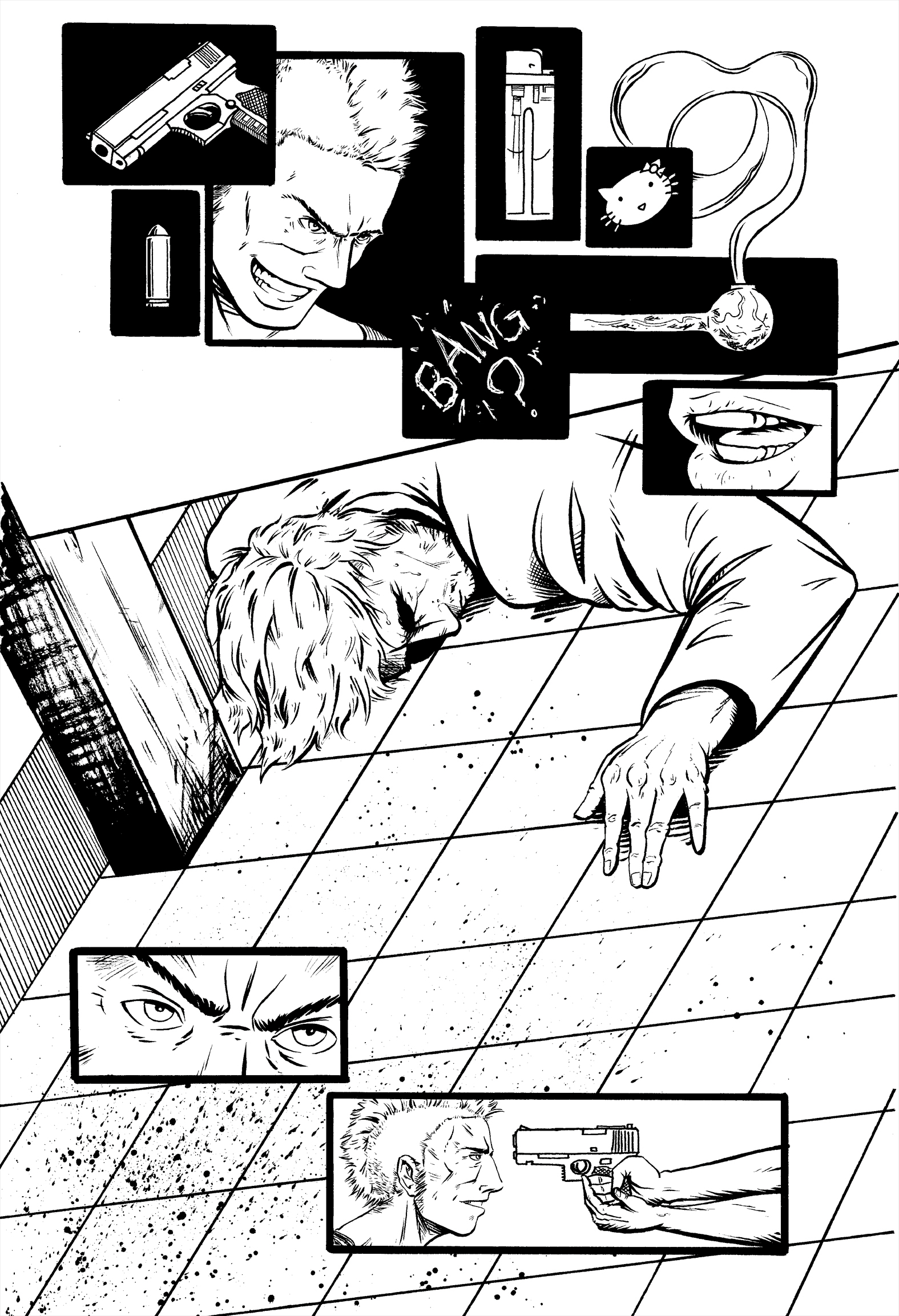
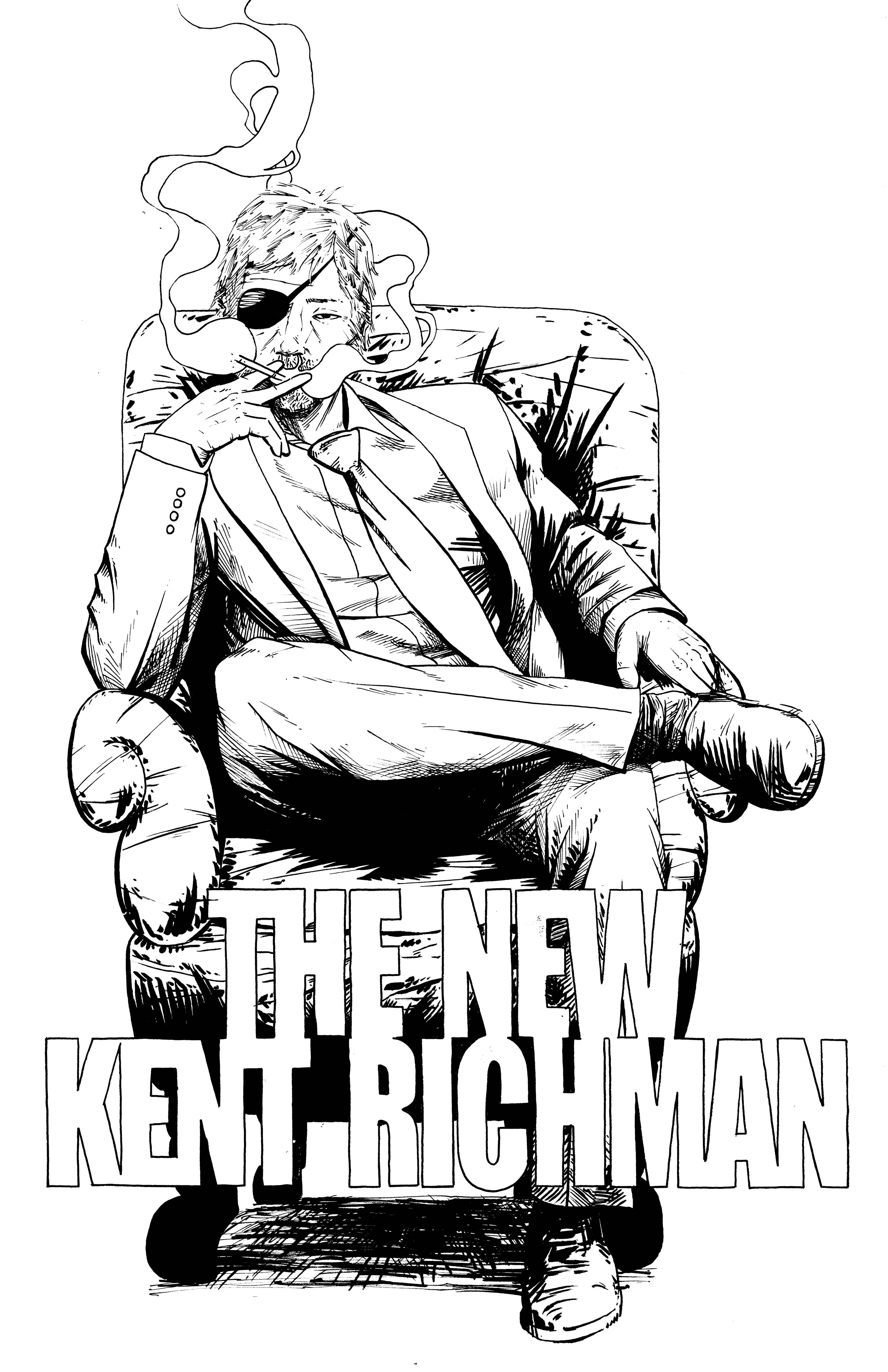
Illustration by Max Currie

 I am the earth, the sea, the sky—I am the universe. On the train to see Renzo, Kent recited the mantra that had helped him survive being big in Japan, being the hot, number-one RI-CHU-MAN-SAN! on the top-rated primetime game show The Strange Bonanza. Shaggy brown hair with blond highlights. Gucci shoes and Omega watch. Cristall Vodka and Filipino hash. Bali tan and Hong Kong massage. The candid nightspot photo in Tokyo Journal, a mention in The Daily Yomiuru, and a stock headshot on TV Tokyo. The paying but quietly welcomed VIP at The Plum Room, one of the many but finer hostess clubs in Ginza where he was not quite among politicians and yakuza chieftains but more likely a local construction boss and a writer popular with young people. The face of Lark cigarettes, PECKUP! Energy Drink, and Sankyou Instant Ramen. Some-time husband to part-time magazine model and full-time tweeker Kumiko Sato. The glimmering gaijin with a fluency in Japanese and the face of a young John Lennon. Before Monique, before Ozman.

Bullet

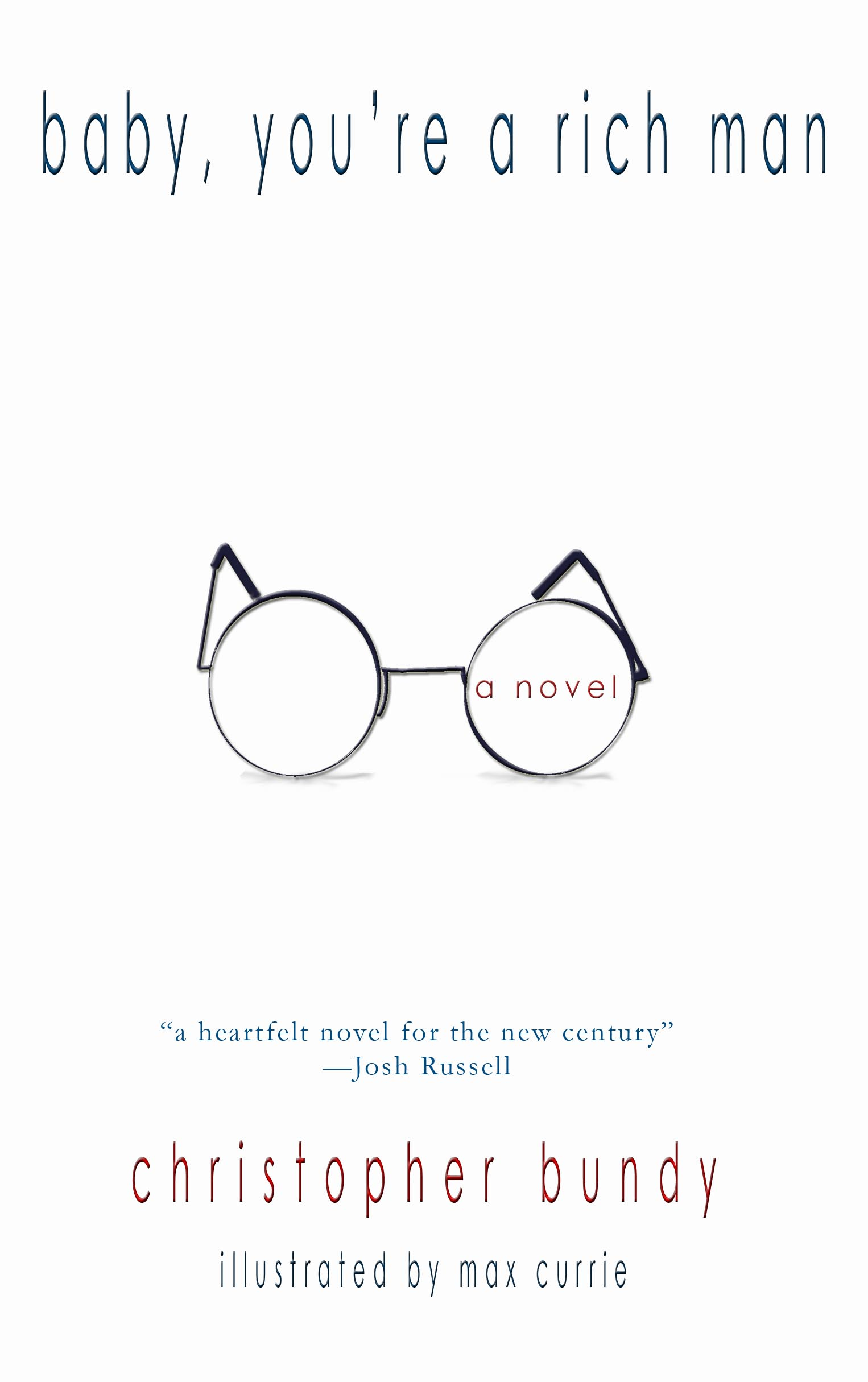
“Baby, You’re a Rich Man is part picaresque, part noir, part tale of a (not so) innocent abroad, part send-up of the ridiculousness of made-for-TV consumer culture. Kent Richman’s fall and rise and fall and rise is as weird and unlikely as his childhood infamy and his adult fame, and Christopher Bundy’s masterstroke is to make of that weirdness a heartfelt novel for the new century, a novel in which everything and anything is possible: love, loss, and maybe even redemption.”

–      Josh Russell, author of A True History of the Captivation, Transport to Strange Lands, & Deliverance of Hannah Guttentag

baby_illustrations_3

Illustration by Max Currie

Thanks to Josh Russell for the kind words above.

For the next few months, I will be excerpting passages from the book one chapter at a time, including illustrations from Max Currie. While the book is illustrated in black and white, Max did some of the illustrations in color. I will showcase many of those color illustrations here, beginning with this frontispiece image from Section One: There’s Really Nothing to It.

Next week… Chapter One.

Ben Spivey, author of the recently released BLACK GOD (Blue Square Press, Nov 2012), tagged me in the ongoing “The Next Big Thing” interview series where authors answer a series of ten questions about their upcoming books and then tag other authors to do the same. Thanks, Ben…
 Baby Youre a Rich Man Cover Front_final

1) What is the title of your latest book?

The novel BABY, YOU’RE A RICH MANdue Spring 2013.

2) Where did the idea come from for the book?

The idea for the book came from a short story I wrote called “Big in Japan” (Thuglit), which serves as the backstory for the novel. The idea for my protagonist Kent Richman, John Lennon look-a-like and B-level variety star on Japanese TV, came from watching Japanese TV when I lived there in the ‘90s. At that time, there were several foreigners who were popular on a number of variety shows.  Because guys like this spoke fluent Japanese and understood the culture inside/out, they were well-integrated into popular culture. I liked the idea of setting a story in Japan without resorting to the familiar “stranger in a strange land” scenario.

3) What genre does your book fall under?

Maybe contemporary satire via a noir-ish/Tarantino lens?

4) What actors would you choose to play the part of your characters in a movie rendition?

The protagonist has to look somewhat like a young John Lennon and be pretty skinny. Maybe Joseph Gordon-Levitt could pull it off. Or Christian Bale, if he could pass for twenty-something. Sean Lennon?

5) What is the one-sentence synopsis of your book?

Man has it all; man loses it all; man wants it back.

6) Who published your book?

C&R Press.

7) How long did it take you to write the first draft of the manuscript?

The first draft, and a much longer version with an entire sub-plot since excised from the novel, took about a year. Revisions took another year.

8) What other books would you compare this story to within your genre?

When I first started writing the book, I had read a lot of Haruki Murakami and loved that first-person narrative. It turned out to be neither in the first-person nor anything like his books, which is good. Books that might fall under the same category/style: Kingsley Amis’ Lucky Jim; Sam Lipsyte’s The Ask; Michael Chabon’s Wonder Boys, with a dash of William Gibson and Chuck Palahniuk.

9) Who or what inspired you to write this book?

In part, I felt a need to write a book about Japan because my time there meant so much to me. But I also wanted to do so in a way that wasn’t about Japan, i.e., I didn’t want to write about how weird or different Japanese culture might be perceived through a Western eye (stranger in a strange land), which has been done to death and feels more like travel essay. I felt the setting suited my protagonist’s story and went from there.

Also, many of my favorite stories revolve around man vs. himself, and I wanted to work from that premise.

10) What else about the book might pique the reader’s interest?

The book is also illustrated with black and white ink drawings from Max Currie, a friend and fantastic illustrator.
BYARM_19

Many were colored (see below) but are too expensive to print for a small press. I always thought the book should be illustrated because of the exaggerated nature of some parts of the story and the characters, like a good comic book. Kent’s life and Max’s illustrations mirror some of the gekiga (dramatic pictures) style of Japanese comics from masters like Yoshihiro Tatsumi whose underground comics reflected a darker reality and introduced the graphic novel format. And I like the way the illustrations reflect the combination of  grim realism and the absurdly comic in Kent’s story. Midway through the book, Kent even stumbles across a DIY comic book that someone has done, illustrating his post-celebrity life, which, of course, freaks him out. And there are also direct connections made in the book to the manga industry and the practice of cosplay (dressing up like comic book or anime characters), which is popular in Japan.

baby_illustrations_2

Finally, I think the book is funny, not ha-ha but subtly so. Kent Richman is one of those characters who straddles the line between sympathetic fuck-up and douchebag. My favorite kind, the ones who are learning how to live in the world. Kent means well, most of the time, but fails a lot. I’m hopeful the reader can see through the douchebaggery to the human.

You can pre-order BABY, YOU’RE A RICH MAN from the C&R Press site.

In the spirit of the series, I’m going to pass the mantle to Gabe Durham, author of the forthcoming FUN CAMP, from Mudluscious Press. He should be posting his own answers to the questions above soon. On to you, Gabe…
Just finished Christopher Coake‘s You Came Back – a book I didn’t want to read. There are almost no subjects I avoid reading about. If an author presents the material in a unique and compelling way, I can be curious about almost any subject. That is, unless it’s the loss of a child. As a father, this is the one subject you really never want to imagine, not through your own eyes, those of someone who’s lost a child, or those of a fictional character. Coake’s book is fiction but still I was wary.

I might not have picked up the book if I hadn’t already read Coake’s debut story collection – We’re in Trouble: Stories – and liked it so much. I’d also heard him read and met him when he interviewed for a position in the program where I was a graduate student. I liked him and his stories. And Coake knows a thing or two about grief, so I trusted him to treat the subject carefully.

I wasn’t disappointed. Using a very close third person, he planted me firmly in his protagonist’s shoes and, from the first pages, I was in for the duration. The story is driven by our compassion for the protagonist and his desire, like ours, to know, to understand what we don’t, including himself and his handling of his son’s tragic loss.

I grew up reading ghost stories (from Poe and Lovecraft to the wonderful (true) ghost stories of the Carolinas, particularly those set in the Outer Banks, to the ghost stories (the best of their work) of Stephen King and Peter Straub). I listened to the CBS Radio Mystery Theater on my transistor in bed at night (at 10:00 and long after I was supposed to be asleep) and, when I first tried to write, drafted my own (highly derivative) ghost stories. These stories stirred my imagination, left me both wondering at the possibilities and shrinking from them at the same time–always a skeptic. And Coake takes cues from this wonderful genre,but without exploiting it. His book is haunted, no question.

Coake works from real life and haunts his book with the emotional, spiritual and intellectual challenges there: loss, doubt, guilt, survival, faith/belief, and reconciliation. He employs a ghost story to get at these emotional issues in a compelling way.

I don’t want to say more. I read the book in two days and was glad for it. The book lingers in my (unsettled) heart and mind, and the more I think about it, the more I applaud what Coake has done so honestly–an unblinking look at the horrors of grief and survival.

The Book of Freaks by Jamie Iredell

https://i0.wp.com/www.howjournal.com/images/iredell1.jpg

The Book of Freaks by Jamie Iredell

Excerpted from my review in H.O.W.

Freaks, an encyclopedia of the everyday, does not allow for the standard book review. There is no sequence of events with which to unfold narrative and pull us through a summary review. There is no life to examine, unless we consider all life, for Freaks is that kind of book—a panorama that swings between the lines of American life. There is no obvious theme, unless you go for everything, e.g., “a connected series of conclusions deduced from self-evident or previously discovered principles.” There is no protagonist to root for, no lush setting to calm us. How does one then assess an entry like this sample from the B section, “Big Legs,” which begins: “Breached out the birth canal massive legs first, legs like gas planets, in leg-shape” and follows with metaphors in which her big legs become Studebakers? Is this poetry? Fiction?

We read on out of simple curiosity, like Alice down her rabbit hole.