Posts Tagged ‘recommended reading’

BYARM_22

Illustration by Max Currie

What Are You Made of, Rich Man?

Kent felt as if he were on another sort of retreat—more of a camping trip for misanthropes in the solitary mountains. Or worse. Had Renzo duped him? By retreat he meant rehab? Midori the group leader about to guide him through a twelve-step program or prep him for some bizarre plastic surgery, a dramatic identity-altering procedure. In the bathroom, Kent tried to piss but nothing came; still his bladder and kidneys ached. Had the shabu ruined him so? The bathroom was basic, a mineral-stained ceramic hole in the ground that led to a backyard septic tank. The closet-like space smelled of rotting wood and wet earth. He emptied a tin bucket of its stale water and refilled it with water that flowed brown from the faucet. This was no resort. He poured the water into the toilet, watching as it splashed to the bottom. A tiny sink, barely big enough to fit his hands into, was to the right of the toilet, above it a small mirror framed in washed-out pink plastic. He gently removed the eyepatch, his eye still an enflamed mess. And now he had a gash on his forehead, handstitched by a Buddhist monk. Kent splashed mountain-cold water on his face, careful not to wet the bandage. Dark circles had dug in under his eyes like topographical tattoos.

Midori knocked on the bathroom door. “Breakfast is ready when you are.”

“Thanks.” A mosquito buzzed in his ear, reminding him of the pests that had swarmed Ko Chang, leaving him a welty mess in his first week in Thailand. “Another minute.”

“Are you okay?” she said through the door.

Where did this stranger find such tenderness for him? Kent sniffed. Something didn’t smell right. He’d never felt so off, so lopsided. He sank to his knees, couldn’t quite catch his breath, scared of what he’d done, of the emptiness before him, not a hint in this world of what waited for him. Up in the Japanese mountains with a woman he barely knew, a madman on the loose, and Kumi, or the idea of her growing fainter each day. The prospect of a return to Tokyo for a diminished version of what he’d once been, even if the idea of making a career behind the microphone didn’t seem so bad, it left him lonelier than he’d been since Kumi changed the locks on their condominium and dumped the hockey bag in the hall. He’d survive in Tokyo but there was no one save Renzo there to pick him up at the train station when he returned. No apartment to crash in for a few weeks until he got settled. He wanted out but had no home, no place he could land. Still, he guessed he’d need to leave this quiet place in the anonymous mountains. Now, if Kent looked for a starting point, which he knew was foolish, not a reliable beginning but, at least for him, a point of reference, a moment at which he could point his finger and say Ah Ha! this or that is to blame, he ached to hold the gun once more, just as he’d once dreamed of jumping from a couch in a rented beach house on Nags Head and—missing his brother.

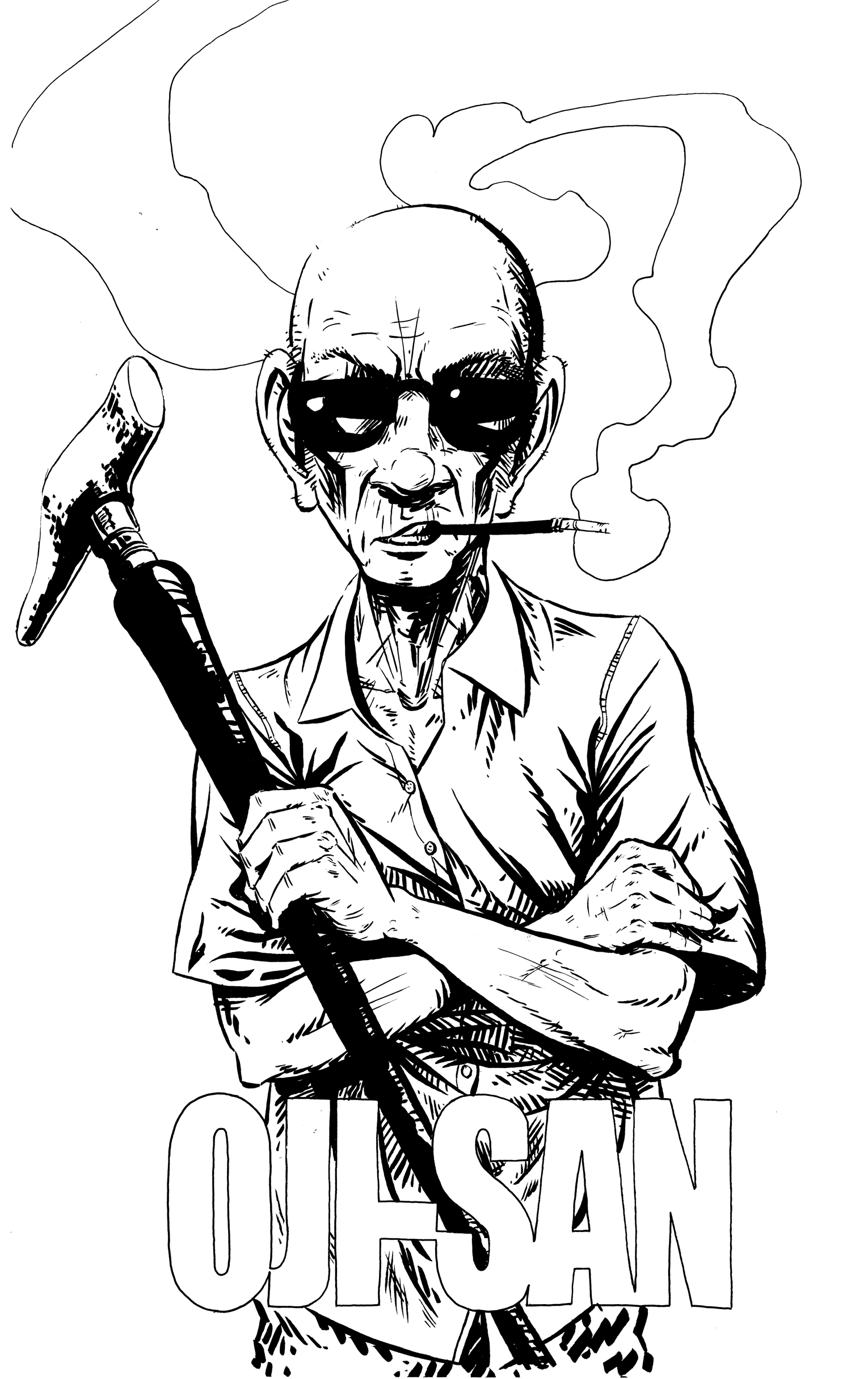
What are you made of, Rich Man? Ozman sang.
PART TWO

ALMOST, AT TIMES, THE FOOL

baby_illustrations_4

Illustrated by Max Currie

Kent stumbled from the car as if he’d forgotten how to walk. Everywhere he looked, he saw Ozman’s mohawk, the bizarre tribal tattoos, and steel-toe boots. His right forearm ached, and Ozman’s mad grin flashed before him. Good God, the man was still loose in Japan, and coming after him. Kent felt certain it was all a joke, and, if not, that Ozman would have been captured by now. Japan was a small country. How long could a man like that roam free? Kent started again with the understanding that he’d lately been captured by every cell phone in the Kanto Plain. He’d broadcast his whereabouts since leaving Tokyo. All Ozman had to do was search the web. Stargazer.com alone probably had a map of Japan with a red line tracing his path, a series of cell phone photos marking his passage northwest. And the corrections officer had verified that Ozman was coming after Kent.

This time Ozman wouldn’t waste his time with torture; he’d kill him.

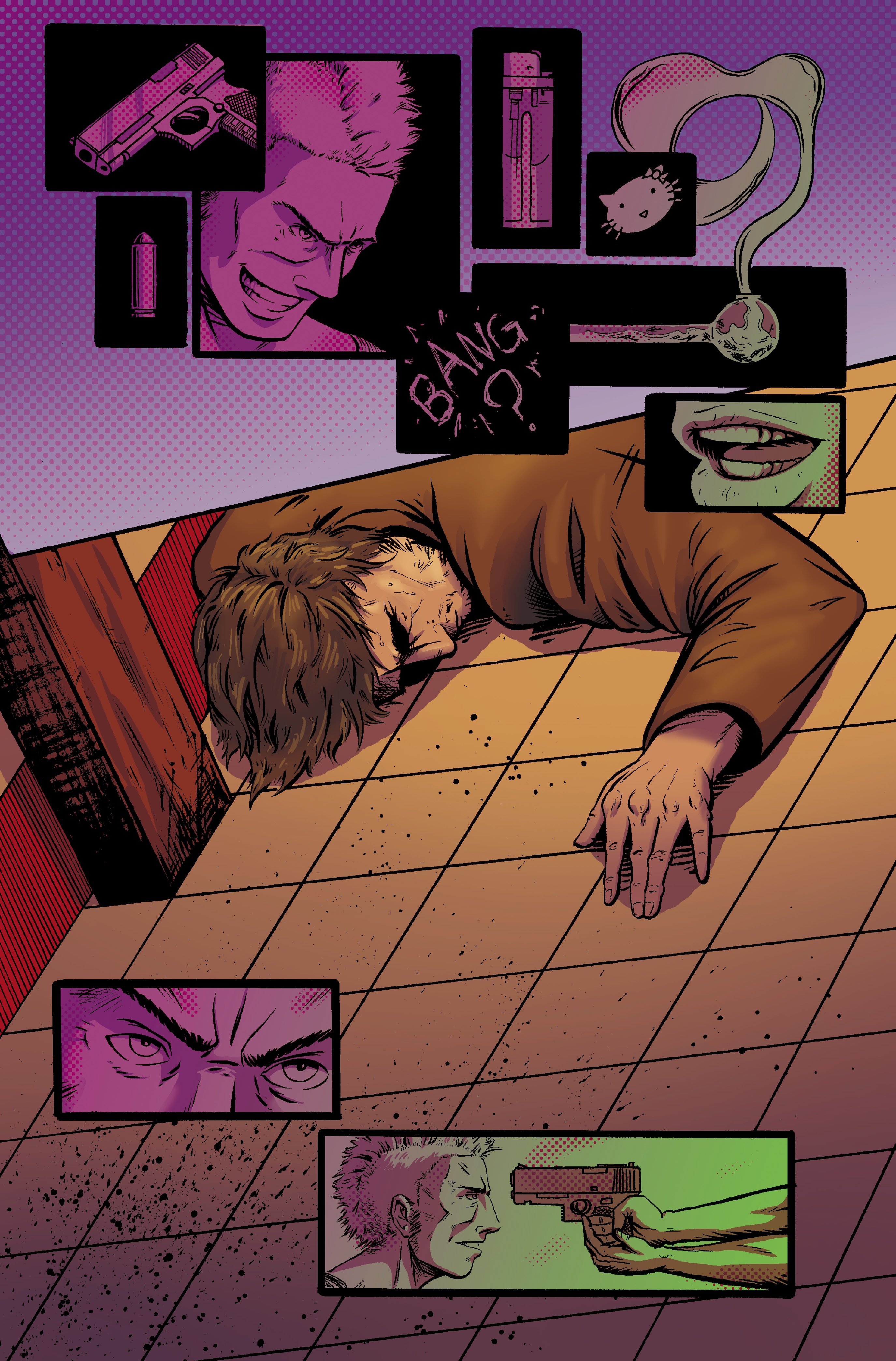
Kent’s gun had sent Ozman to prison, the 9mm an impulse buy in a Roppongi bar from an American sailor stationed at Yokosuka with the US 7th Fleet for $2000. A high price, but the easiest way to find one in Japan. When he first held it he knew he wanted the pistol. Though he’d fired the gun only once—an accident in which he shattered the floor-to-ceiling mirror in his bedroom, he liked having it. That day with Ozman, Kent had held the gun for all of ten seconds, slamming the clip into place before it fell from his trembling hands. As he had reached to retrieve it, Ozman appeared at the closet doorway and kicked Kent in the gut, sending him to the floor. Kent remained hopeful—he could do this, he could outsmart, outtalk, and outthink this Neanderthal. He rummaged for another weapon, coming up with a shoe—a Gucci loafer with a heavy heel. But Ozman was already there, pointing the Beretta at Kent’s head. He disengaged the safety and pulled the slide, loading a bullet into the chamber. Looking for this?

Ozman now had nothing to lose. How long would it be before he tracked Kent down? And his idiot agent had sent him on this errand to the mountains for some meditation and a documentary, as if Ozman couldn’t find him here. Kent should’ve been on a plane to Hong Kong or Taipei, a safe haven from loonies with no passport. Kent lit a cigarette and tried to think. But his eye throbbed and his hands shook so bad he had to stuff them in his pockets. He folded his fingers around his copper pipe.

He waved a hand at Midori. “I’ll be back.” And walked toward the restroom.

Bullet

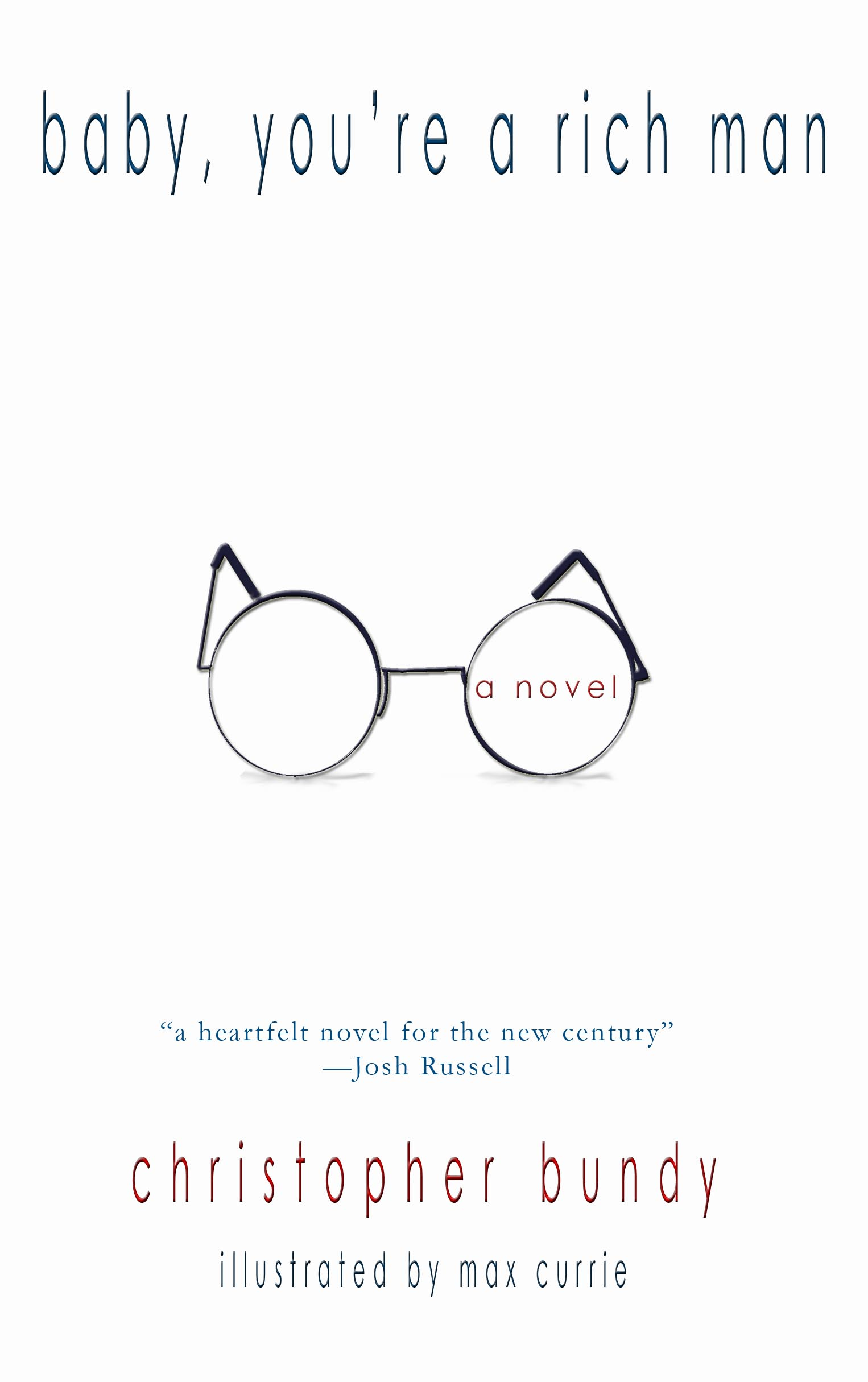
It’s Pub Day for Baby, You’re a Rich Man!

Baby Youre a Rich Man Cover Front_final

Get your copy here:amazon
Or better yet, support indie presses and get it straight from C&R Press

c&r_press_logo

BYARM_13

Illustration by Max Currie

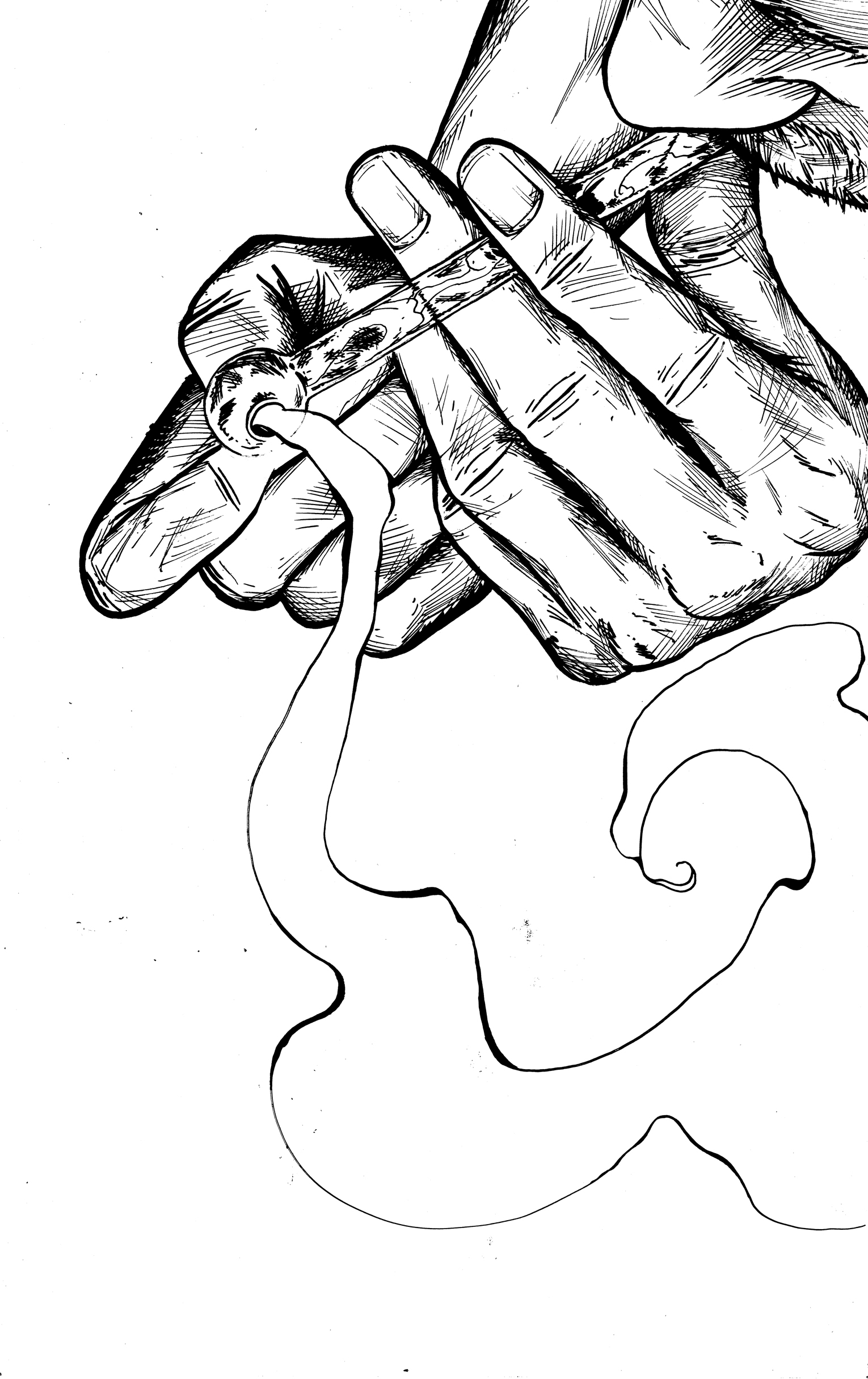
On Shabu Kent believed he could find a way back to what he’d once been, the only thing in his life besides Kumi that ever made him feel that way. Kumi had saved him from what he’d left in the States. From Allan’s death and his mother who fell deeper into an already dangerous alcohol dependence and seemed unable to forgive him. From his stargazing father who offered no solace beyond the possibility of reincarnation via suicide. Kumi’s love and his popular success as RI-CHU-MAN-SAN! had convinced him that he was better than the person he’d left in America, that he was capable of being someone beyond the seven-year-old infamous for fratricide.

On shabu, Kent believed his life would turn around. Kumi would take him back, and they could start over for real this time. Ozman would be captured, his sentence lengthened, security in his cell heightened. Kent would return to Tokyo, rebuild his career, and forget Monique and Ozman. He’d forget Kumi had ever left him. Forget Renzo’s ridiculous publicity stunt. Together he and Kumi would once more become Tokyo’s Favorite Celebrity Couple.”

On shabu, Kent sorted out the disorder of his life. His thoughts marched along single file. On shabu, Kent trusted his life was fixable, that the chain of events which had led him to Japan and on to Tokyo sound stages and his life with Kumi, and, finally, to a small town in the mountains of central Japan would also point him right back to Tokyo and the good life he once enjoyed.

Bullet

baby_illustrations_6

Illustration by Max Currie

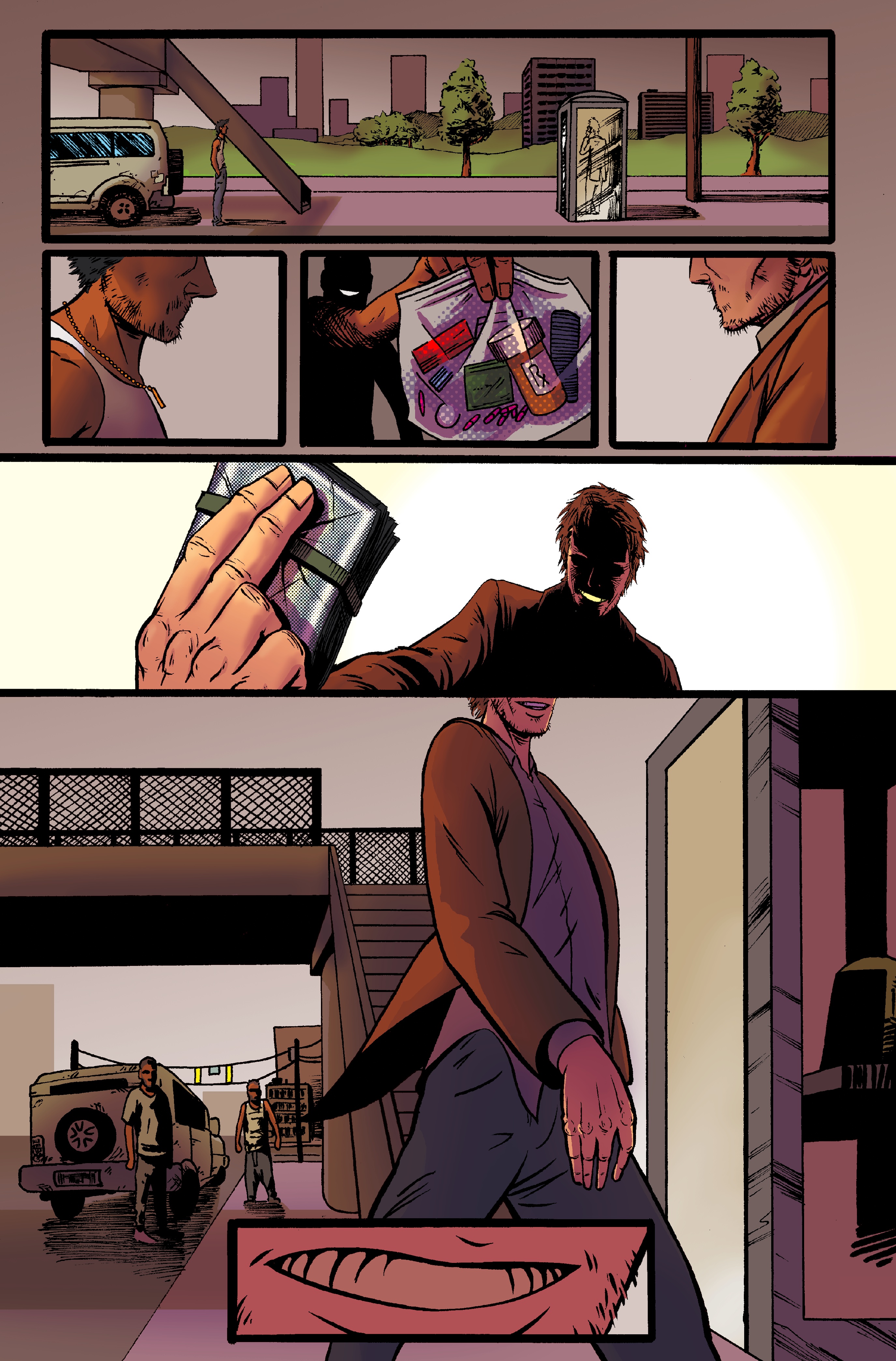
Beside Azuma’s train terminal and under a pedestrian bridge, Kent spotted a group of Iranians huddled near a telephone booth. At train stations all over Japan, the immigrants had fashioned a surrogate world. They assembled around minivans and kiosks, peddling cheap silver and gold, phony telephone cards, hashish, prescription pills hard to come by with Japan’s conservative national health program, and shabu. Kent fingered the bills in his jeans pocket, thinking about how far he could go if he spent a little more than he should. Walking past the group of Iranians, he looked for recognition from any one of them. He pretended to use a pay phone nearby and when finished with the charade nodded to a man who nodded back but didn’t speak. He was tall and wiry, his black hair shaggy over his weathered face. He fidgeted beneath an oversized black silk shirt in gold damask. A gold medallion in the shape of a dollar sign on a thick, braided chain hung from his neck. Following a practiced assessment of the white gaijin, the Iranian smiled and held out his hand. With the handshake, he and Kent were old friends, the imminent exchange understood.

The Iranian patted Kent on the back and spoke in English. “Hello, my friend. How are you? I am Oscar.” A light wind seemed to circle him in the shade of the station, his shirt rippling like a sail.

Kent stood sweating in the humid air, reduced to squinting in the dark corner. “Nani ga arimasu ka?” He didn’t care what Oscar had, only what he wanted.

Oscar switched to Japanese. “Nihongo wakaru?” Thus began a dance of efficient nods and gestures that signaled Kent’s purpose and the beginning of a buy. It was a choreographed routine, other Iranian men nearby appearing then vanishing inside a minivan. The terminus speakers broadcast a waltz as if in time to their movement. Within seconds, Kent had lost sight of all but Oscar as the others vanished.

Oscar pulled Kent by his arm into the shade of the stairwell. “Do I know you? You have been here before?”

“No.” Even in the shadow of Azuma’s train station under the cloud of a drug deal, Kent felt a tingle of satisfaction at being recognized. He nearly swept his glasses from his face.

Oscar took his hand again, squeezing it for another five seconds, as if searching for credibility. “I think I do know you, but it’s okay. Maybe I don’t. So, you want something from Oscar?”

“Yes, I want something from Oscar. Whatever you got.”

Like a magician pulling a quarter from mid-air, Oscar opened his hand, a matchbook-sized plastic baggie in his palm. “Is this what you want?”

“That’s a start,” Kent said.

“What are we talking about?”

“About five times that. And some hash. Whatever you got.”

“Come back at six. I’ll meet you at Uncle Bob’s Burger House. You know, up the street?”

“I can find it. Can you give me what you got now?”

“Take it all, friend. I can take off work early and go see my girlfriend. She’s always complaining I don’t spend enough time with her.”

In a telephone booth, Oscar left two grams of shabu, a gram of hash, and an assortment of painkillers, their identities for Kent to sort out. Kent replaced it with ¥15,000 inside the pages of the telephone book after pretending to make another call. Oscar’s compatriots reappeared from the shadows, huddling and nodding to Kent. The sweet smell of cheap cologne found in most public onsens lingered around the telephone booths and over the sidewalk, clouds of it under the stairs. As Kent turned to leave, Oscar smiled, his mouth growing wider until Kent thought it would stretch to his ears, and waved him off as if they were old friends.